Earlier this year, the Kaufmann House, in Palm Springs, California, a classic Richard Neutra home was part of Christie's Spring Contemporary Art Auction. It sold for $16.8 million including commission along with an additional plot of land adjacent to the property for $2.1 million. The Real Estalker reveals that the architectural classic is back on the market because the current owners are divorcing. The home is now listed at $12.9 million and is having a hard time finding buyers, not because of the house, which is exquisite, but because Palm Springs real estate is some of the hardest hit in California's real estate doldrums.
martes, 25 de noviembre de 2008
Kaufmann House
Earlier this year, the Kaufmann House, in Palm Springs, California, a classic Richard Neutra home was part of Christie's Spring Contemporary Art Auction. It sold for $16.8 million including commission along with an additional plot of land adjacent to the property for $2.1 million. The Real Estalker reveals that the architectural classic is back on the market because the current owners are divorcing. The home is now listed at $12.9 million and is having a hard time finding buyers, not because of the house, which is exquisite, but because Palm Springs real estate is some of the hardest hit in California's real estate doldrums.
Mitsuoka Galue Limousine S50
Fuente: motorpasionEl carrocero japonés Mitsuoka le ha dado un baño retro-futurista al sedán Infiniti M35, convirtiéndolo en u
na limusina atrevida aunque no demasiado escandalosa. Hasta casi me atrevería a llamarla elegante.
El Mitsuoka Galue Limousine S50 equipa un 3.5 V6 (el famoso VQ35HR de Nissan) con 313 caballos, aceptables para mover sus 1.780 kg de peso. A pesar de lo aparatosa que parece su carrocería, sólo mide siete centímetros más de largo que el modelo original.
Lo mejor de todo es su p
recio, 100.000 dólares. Claro que no vale hacer la conversión directa a euros, porque partimos del supuesto de que el Infiniti M35 cuesta 43.500 dólares.
Aún así, pudiendo hacer la equivalencia dólar-euro, una limusina de este precio es bastante “asequible”, unas seis veces menos que el Mercedes S Pullman Guard.
El interior del Mitsuoka Galue Limousine S50 tiene una calidad aceptable, por tanto la única pega son las reminiscencias a otros modelos como Rolls-Royce. En definitiva, y si se me permite el concepto imposible, una limusina para pobres.
El Infiniti M35 original, en el que se basa el Mitsuoka Galue Limousine S50:
Una enfermedad beneficiosa
La malaria es una enfermedad endémica entre casi la mitad de la población mundial. Millones de personas mueren cada año porque no reciben la medicación apropiada. Resulta tremendo pensar en la cantidad de dinero que se gasta en investigar nuevos fármacos para tratar enfermedades que afectan a un pequeñísimo porcentaje de la humanidad mientras no se hace prácticamente nada por luchar contra la malaria. ¿Por qué? La malaria no es una enfermedad del primer mundo. Todos somos iguales, pero unos son más iguales que otros.
La malaria no sólo es el ejemplo perfecto de un mundo ruin.
También es la demostración clara del funcionamiento de la selección natural. El microbio plasmodio, origen de la malaria, invade los glóbulos rojos y hace que se adhieran a las paredes de los vasos sanguíneos más pequeños. De este modo no llegan hasta el bazo, el único órgano del cuerpo capaz de matarlo. Pues bien, los pueblos de las zonas de África tropical donde la malaria es endémica poseen una inmunidad natural a esta enfermedad gracias a un defecto genético que modifica la estructura de la hemoglobina: los glóbulos rojos se tornan falciformes, parecidos a croissants. Además, están rodeados de filamentos microscópicos en forma de aguja, como las púas de un puercoespín. Los plasmodios quedan empalados en los glóbulos rojos, que pueden alcanzar perfectamente el bazo y someterse al proceso de desinfección.
El problema grave aparece cuando los genes responsables de esta malformación se heredan, a la vez, del padre y de la madre. Entonces el individuo padece de un tipo de anemia llamada, a la sazón, anemia falciforme 'o drepanocítica' que causa la muerte durante la infancia. Es el pago por sobrevivir a la malaria. Pero lo más interesante es que este defecto genético no se propaga en un entorno sin malaria. En el siglo XVII los traficantes de esclavos holandeses llevaron negros de lo que hoy es Ghana a dos colonias de su país: Curaçao, en el Caribe, y Surinam, en Sudamérica. En Curaçao no hay malaria, pero en Surinam, sí. Trescientos años después, en Curaçao los descendientes de aquellos esclavos no presentan prácticamente esa irregularidad en sus glóbulos rojos, pero en Surinam sigue siendo común.
Si la supervivencia implica sufrir la amenaza de graves formas de anemia para evitar una muerte segura, la elección de la naturaleza es clara. Pero cuando no hay ninguna ventaja en sufrir esa malformación de los glóbulos rojos, los genes responsables no se propagan.
lunes, 24 de noviembre de 2008
Baile peligroso
Castillos
A Man’s Home: Unusual Castles …and One Very Special Village
Arguably born the day that villagers -- and the people who profited off them -- decided that wood wasn’t strong enough to keep them safe, castles quickly became more than just edifices dedicated to security. Instead of repelling borders, real or imaginary, castles became THE status symbol of status symbols. Monuments to bravado, they were stone and mortal proclamations to the age-old idea that "mine is bigger than yours."
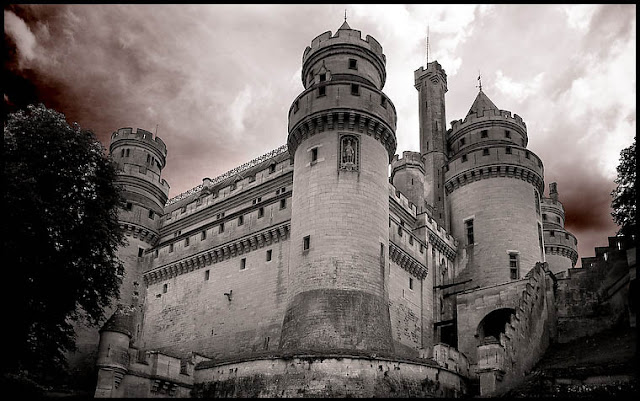
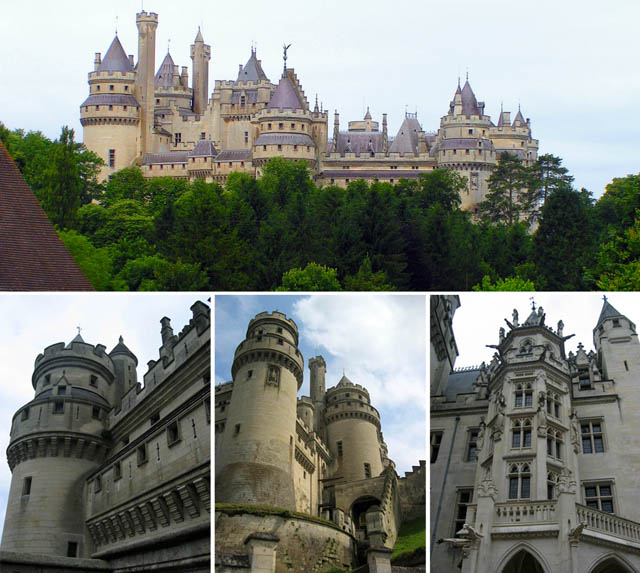
Pierrefonds - picture-postcard example of a castle
If you want an picture-postcard example of a castle, you don’t have to go anywhere but the Château de Pierrefonds in France. Although it may have started out as a structure designed to keep some folks out and others safely in, it was later partially sugar frosted by none other than Napoleon the 3rd, who was shooting for a true nobility status symbol: a iced cake that no one but the very rich and very privileged could eat.

(image credit: Frédéric Lavaux)
Pierrefonds is still a beautiful place, even if its fortifications were overly gilded –- or maybe because of it. It’s no wonder it's used to this day when central casting gets a call for a classic castle.

(photos by Ralph Gant and Benoit Stordeur, see more)
When fairy tale jumps from a landscape and hits you between the eyes
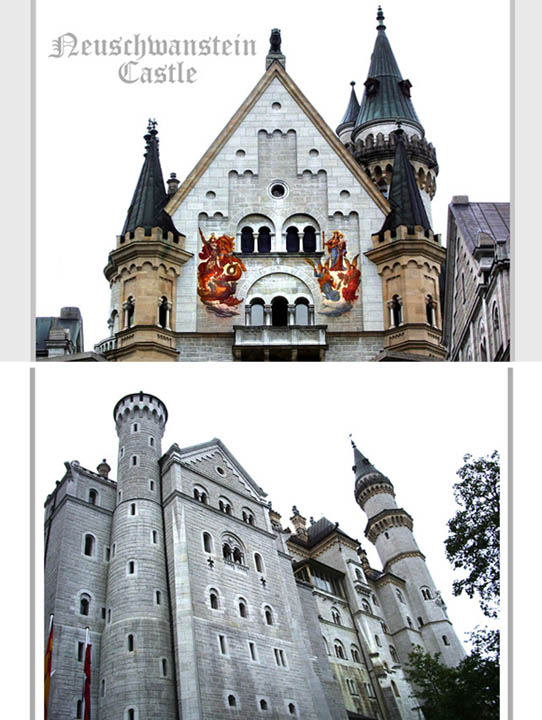
If you want a real Disney, fairy-tale, and totally insane castle, you have to visit the residence of one totally insane German king, namely Ludwig II of Bavaria. Look up gaudy in the dictionary and there’s a picture of his castle: Neuschwanstein ("The New Swan Rock").


Neuschwanstein Castle, gracing ten million over-saturated postcards and jigsaw puzzles, (image credits unknown)
Glitzed and filigreed, Neuschwanstein is like Ludwig’s twisted brain turned inside out and realized in stone and brick. It is also sublime and splendid, over-the-top and strangely fragile - all at the same time. We are going to devote a special article to it, truly a place not of this world.

photos by Avi Abrams
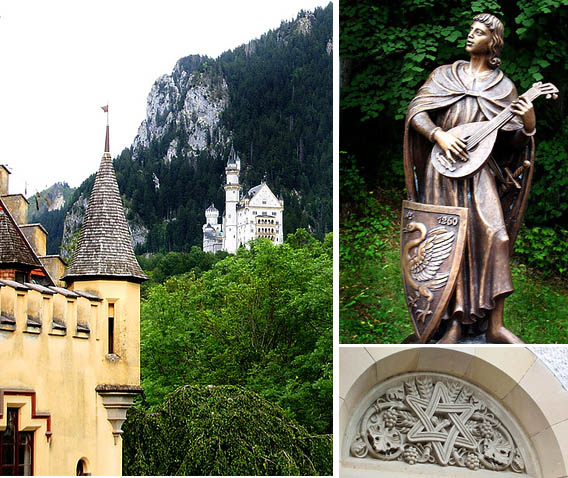
Monstrous chandelier? Check. Room made to look like a cavern? It’s there. Entire rooms dedicated to Wagner (with whom Ludwig was obsessed)? Absolutely. It’s all there, larger and more ornate than any life … unless, of course, you were the King of Bavaria.

photos by Avi Abrams
The Coral Castle - Nobody knows how it was built
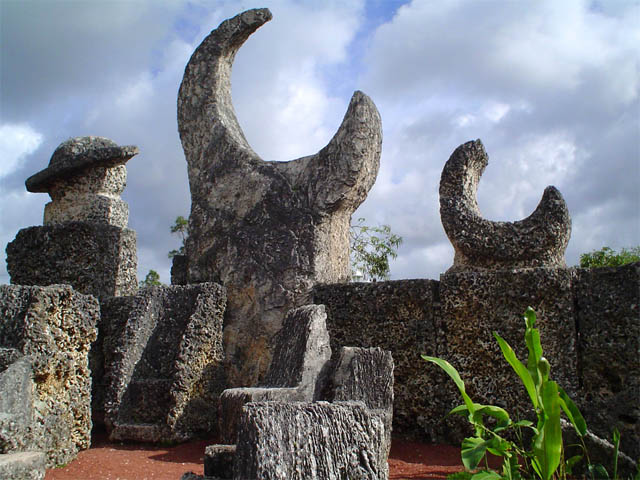
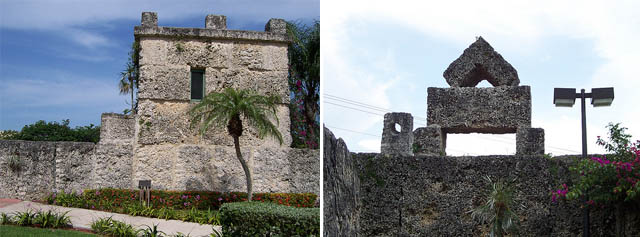
One of my favorite castles, though, wasn’t the dream of a king realized in stone and mortar. Spurned at the altar back in his native Latvia, Edward Leedskalnin took his disappointment, and a case of tuberculosis, to Florida in 1923. There, in the land of oranges and sunshine, Leedskalnin began to build his very own castle, one he worked on until his death in 1951 (more info)

(image credit: sarahmizoo)

(images credit: Jim)
It’s still there and definitely worth seeing. It might not have the polish of Pierrefonds or the glimmer of Neuschwanstein, but Rock Gate Park, as he called it, is still a striking sight: monstrous slabs of coral skillfully balanced and beautifully positioned, all of them assembled without reinforcement or mortar. He spent over 28 years building the Coral Castle, refusing to allow anyone to view while he worked.

(The Throne Room, supposed to depict the Moon and the planets - photo by Claudia Domenig)
Leedskalnin’s construction genius is legendary. No one quite understands how he built his castle and then moved it ten miles away in 1936. Some people think he used a kind of perpetual motion machine or mystical methods to move his several-ton blocks. Whatever the means, his Coral Castle, is still a magnificent achievement -– the sublime result of his own two hands, his incredible inventiveness, and a tragically broken heart.
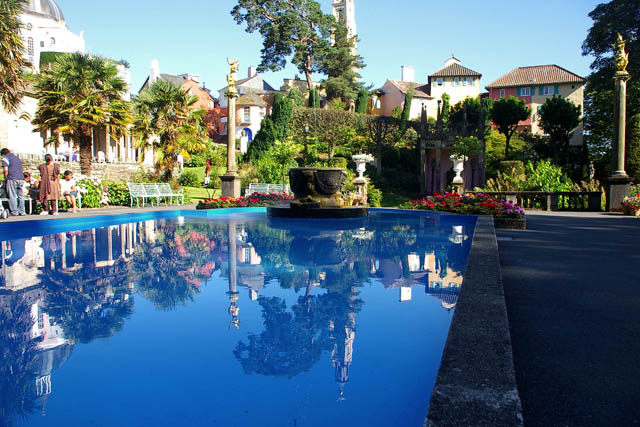
Portmeirion: a surreal village in Gwynedd, Wales
Stepping away from literal castles, but staying within the theme of very special men and the homes they created, one of the most beautiful is one you might not know the name of but one you’d recognize immediately. All I need to write is "You are Number 6."

(image credit: Richard Hagen)
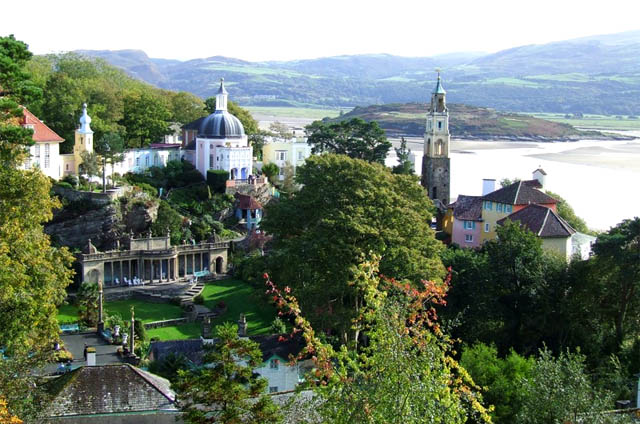
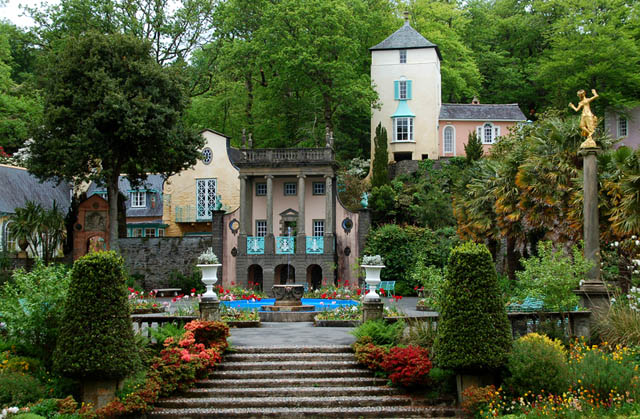
Located in Wales, Portmeirion was created by Sir Clough Williams-Ellis in 1925 (though some of it wasn’t finished until 1975). Although Sir Williams-Ellis wasn’t a king, he was obviously knighted, and certainly had help with his remarkable residence. Portmeirion deserves to stand with Ludwig’s vision of Germanic paradise and Leedskalnin’s eccentric coral castle because of its unique, and spectacularly beautiful, vision.
(image credit: Gavin D. J. Harper)
Williams-Ellis was so dedicated to preserving the tranquil elegance of Portmeirion that the filming location of Patrick McGoohan’s "The Prisoner" wasn’t revealed until the final episode of the series. Even with the careful hiding of the village’s identity, anyone who knew anything about architecture would have recognized the Williams-Ellis’s pearl-white cottages and the legendary green dome where, in "The Prisoner", the village’s rotating Number 2s had their office.

(image credit: Matt Buck)
Portmeirion is truly a beautiful place and completely unspoiled by its television appearance. It remains today just as Williams-Ellis intended it to be: a tranquil village with a tasteful dusting of nostalgia.
The Postman's Palace - another single-handedly built castle
Ferdinand Cheval has imagined his "Ideal Palace" and simply went on to built it - after all, why not? He spent 33 years with this project (located in the village of Hauterives in the picturesque Drôme region of Southern France) - but the results are nothing less than stunning:


(photos by Emmanuel Georges, Eric Devlies, Francerama)
Initially considered "the village idiot", he was suddenly hailed as a genius and a celebrity in France, upon completion of this intricate affair. But is it the "Ideal Palace"? Everyone seems to have a different opinion. More info and images are on this page.
Whether it's the gussied-up fortresses like Pierrefonds, the gilded dreams of a mad king like Neuschwanstein, the eccentric genius of Leedskalnin and his Coral Castle, or the whimsical grace of Williams-Ellis’s Portmeirion and Ferdinand Cheval's Palace, a man’s home can really be his castle.
More Fantastic Castles, to Visit and to Think About (Wistfully)
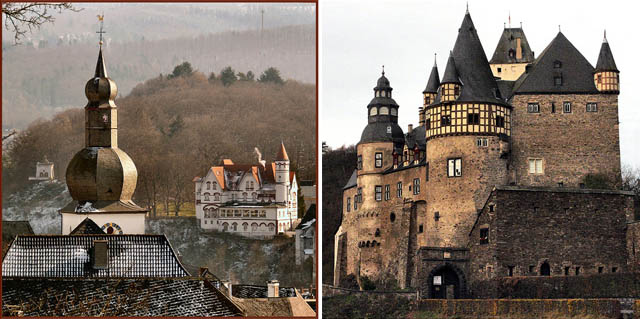
Eltz Castle, Germany: another fairy-tale location, this time completely surrounded (and in certain degree concealed) by the forest:

(image credit: frizztext, see more)
Germany (just like Switzerland and Austria) has many enchanting castles, big and small -

Castle-like mansion in Arnsberg and a large Buerresheim Castle, photos by frizztext
The stretch of Rhein between Cologne and Mainz has the especially high concentration of great fortresses, presiding over the quaint riverside villages:

This is a great site listing all the castles
Egeskov Castle, Denmark:
(image credit: Malene Thyssen)
Eastern Europe abounds in awesome castles. This is for example, Castle in Moszna, Poland:

Check out the sinister door handle from the Dracula's Bran Castle on the bottom right. Towers emerging from the mist in the photo below: this is Bragança, a walled town in northern Portugal. Very evocative image on the bottom left is Le Chateau de Nyon in Nyon, Switzerland:

(originals unknown)
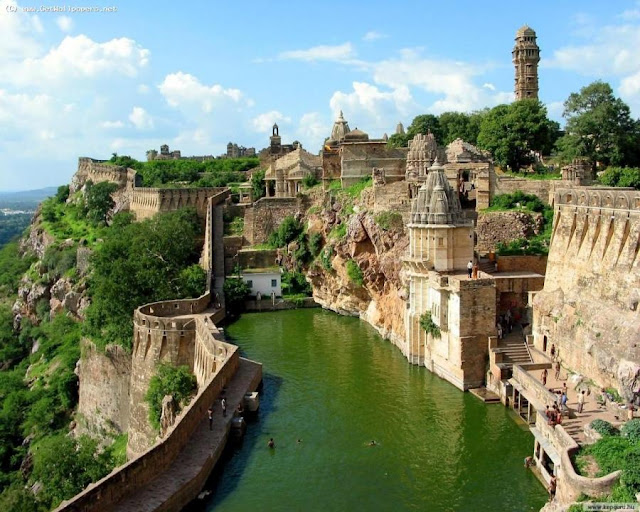
The Chittorgarh Fort in India. This pool was often the only source of water during the numerous sieges by Mughal Emperors:

(image via)
Nestled in High Places:
The way to the Guaita Fortress in San Marino (more info) -

Try not to think of "Myst" and "Riven" while looking at the above picture... Here is the high cliff on which the fortress stands:

(image credit: Ricardo André Frantz)
Overlooking the Echaz Valley and the storybook village below, often shrouded in fog, Lichtenstein Castle comes close to being the perfect castle in Europe.

(image credit: Andreas Tille)
The Abandoned Castle in Rural Italy
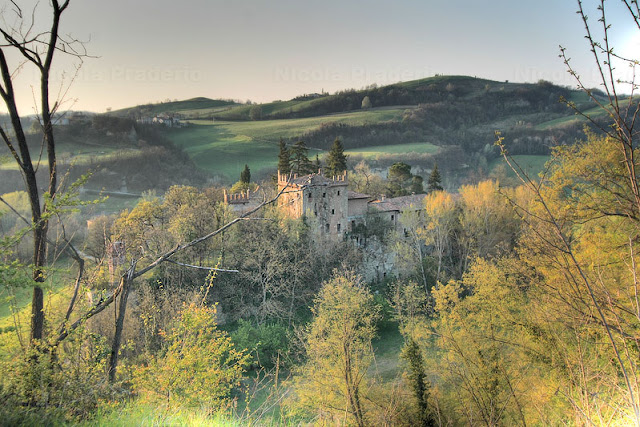
Oh yes, still unclaimed by some luxury developer, nor touched by multi-million renovation... hiding in a valley in a tangled forest: Castello di Zena:
(here is a Google Earth location, but don't set your hopes too high - this is a guarded private property)

(image credit: cyberbiscottato)
A mystery. Falling to pieces. Splendor in the grass.
A View That Launched 10,000 Epic Fantasy Books
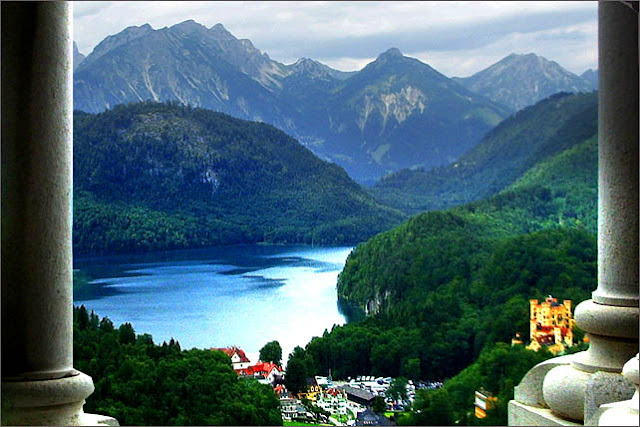
Another feature of fortified high places is the splendid view they often afford. We'd like to open up a sort of competition: The Best View From a Castle, but the winner already easily comes to mind - and it's the Neuschwanstein's Castle, again. The panorama of the towering Alps and a nestled gem of the lake, Alpsee, is enough to make you sigh and close your eyes... dreaming.

Photo by Avi Abrams
The ultimate castle, that was ever designed to grace the face of the Earth
King Ludwig, again. The planned Falkenstein - truly THE Lost Castle. The one that he was all set to build - but for the financial (and mental) meltdown he suffered.

Christian Jank's first High Gothic design for Falkenstein, 1883. (image via)
Also Read: Abandoned Castles of Russian Countryside, Potala Palace in Tibet, Miniature Crimean Castle, Mont Saint-Michel
domingo, 23 de noviembre de 2008
Entendiendo el déjà vu
¿Quién no ha tenido alguna vez la inquietante sensación de estar repitiendo una experiencia ya vivida, a pesar de que en realidad es totalmente nueva? Este fenómeno, bautizado por Emile Boirac como déjà vu (“ya visto” en francés) hace más de un siglo, ha despertado la curiosidad de centenares de científicos a lo largo de la historia. Ahora la psicóloga Anne M. Cleary acaba de encontrar una relación entre el déjà vu y el funcionamiento de nuestra memoria de reconocimiento, la parte de la memoria que se pone en marcha cuando reconocemos a un amigo en la calle o escuchamos una canción conocida. Según explica hoy Cleary en la revista Psychological Science, existen dos tipos de memoria de reconocimiento: la recolección y la familiaridad. La primera interviene cuando, por ejemplo, reconocemos a una persona en una tienda y recordamos haberla visto antes en el autobús. La familiaridad sucede cuando una situación “nos suena” pero no recordamos en qué momento anterior sucedió.
Para poner a prueba el funcionamiento de esta última, Cleary llevó a cabo una serie de experimentos en los que los participantes debían estudiar una lista aleatoria de palabras. A continuación eran sometidos a un test de reconocimiento donde había palabras que ya habían estudiado, palabras nuevas y otras muy similares en sonido a las aprendidas en la fase inicial. Sorprendentemente, todos los encuestados experimentaban una sensación de familiaridad con estas últimas palabras. Según Cleary, esto sugiere sugieren que nuestro cerebro almacena las experiencias en fragmentos o piezas dispersas. Y que el déjà vu se produce cuando algunos detalles de la situación actual se parecen a ciertos aspectos de una vivencia previa. Por ejemplo, cuando las formas de una calle se parecen a otra por la que hemos paseado. O cuando el timbre de voz de un desconocido que nos habla es similar a otro que escuchamos anteriormente. En otras palabras, en el déjà vu solapamos lo nuevo y lo pasado hasta el punto de creer que toda una experiencia se repite, pero sin que el recuerdo de un momento concreto nos venga a la mente.
Hermès diseña un Smart por su 10º aniversario
Hermès presentó el pasado jueves en el Grand Palais de Paris, el pequeño Smart diseñado para celebrar el 10 aniversario del vehículo. Están disponibles en 10 colores incluido el oro, índigo y el color naranja característico de la firma de lujo. Los visitantes también pueden tener un chófer para viajar en uno de los vehículos. El precio del Smart está en 38.000 € y además es ” eco friendly” . Será un placer conducir un coche tan Cool!
Un sostén masculino es el nuevo superventas online en Japón
¿Quién dijo que los sujetadores eran sólo para mujeres? Una tienda japonesa de lencería ha empezado a vender por Internet unos sostenes para hombres, que se han convertido rápidamente en uno de sus artículos más populares.
Desde que salieron a la venta hace dos semanas en Rakute, un gran centro comercial online japonés, su tienda Wishroom ha vendido 300 sujetadores para hombres por 2.800 yenes (unos 23 euros). La marca también ofrece braguitas para hombres, así como lencería para mujeres.
"Me gusta esta sensación ajustada. Me siento bien", dijo a Reuters el representante de Wishroom Masayuki Tsuchiya mientras mostraba cómo queda el sostén, que puede llevarse de forma discreta bajo la ropa masculina.
La directora ejecutiva de la marca, Akiko Okunomiya, dijo haberse sorprendido por la cantidad de hombres que buscan a su mujer interior.
"Creo que cada vez más y más hombres se están interesando por los sujetadores. Desde que lanzamos el sostén masculino, hemos estado recibiendo opiniones de los clientes diciendo 'guau, he esperado esto durante mucho tiempo'", dijo.
Sin embargo, el sujetador, disponible en blanco, negro y rosa, no es una venta fácil para todos los hombres.
En una sola noche, esta pieza de lencería despertó en Mixi, la mayor red social de Japón, un acalorado debate online con más de 8.000 personas discutiendo los puntos a favor de que los hombres lleven sujetadores.
Los piratas somalíes son cada vez más impopulares tierra adentro
Las cárceles de la región semiautónoma de Puntland, epicentro de la piratería, están desbordadas. Otras regiones del país también le han declarado la guerra.
“Cada vez hay más piratas en Somalilandia, tenemos que erradicar esta enfermedad”, asegura un alto dirigente de esta república no reconocida.
Viejos enemigos de la Unión de Tribunales Islámicos, los piratas han sobrepasado los límites al secuestrar un petrolero saudí.
Un militante de la milicia Al-Shabab, dice que “no pueden tolerar que se secuestren barcos de países musulmanes, tanto dentro como fuera de las aguas territoriales, un acto indigno que combatirán.”
El Sirius Star permanece secuestrado cerca de Haradheere, un puerto bajo control de los Tribunales Islámicos que ven como este movimiento se extiende hacia el sur del país. La talla del petrolero da muestras de la audacia de los piratas cuyo floreciente negocio está desestabilizando, aún más, la casi inexistente economía del país, con una inflación galopante y la desaparición, casi total, de la ayuda humanitaria. Además, los piratas interfieren en los intereses de los Tribunales Islámicos.